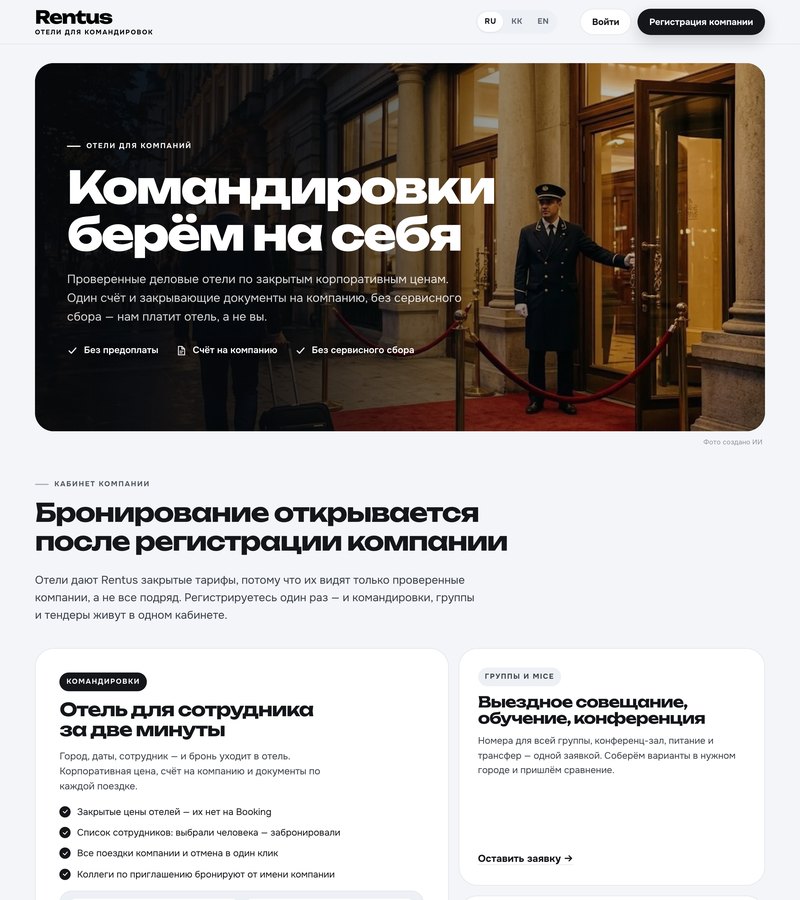
Rentus
A closed hotel booking platform for business trips: companies register, get corporate rates, a single invoice and closing documents. Hotels get their own cabinet with an availability grid, rates and stop-sales.
rentus.kzDemo data: products, prices and sellers are fictional. Photos are public domain
Product, service, B2B and rental marketplaces with seller dashboards, moderation, commissions and payouts — launched as a focused MVP and scaled as your platform grows.
What do you need?
Pick a service, leave your contact and we'll send an estimate.
We choose the technology to fit the task — load, budget and deadlines. No exotics: only proven tools that keep working for years.
Live projects you can open and explore.
A closed hotel booking platform for business trips: companies register, get corporate rates, a single invoice and closing documents. Hotels get their own cabinet with an availability grid, rates and stop-sales.
rentus.kz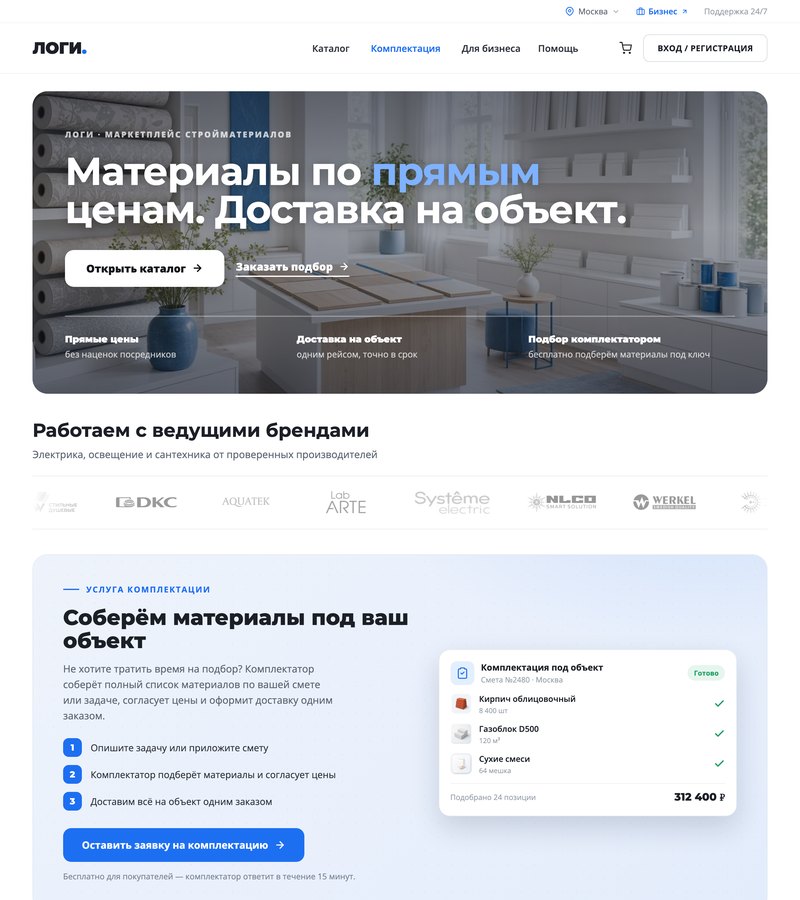
A building-materials marketplace: a filtered catalogue, cart and checkout, assisted material selection against an estimate and delivery to the site in one run.
mylogi.ru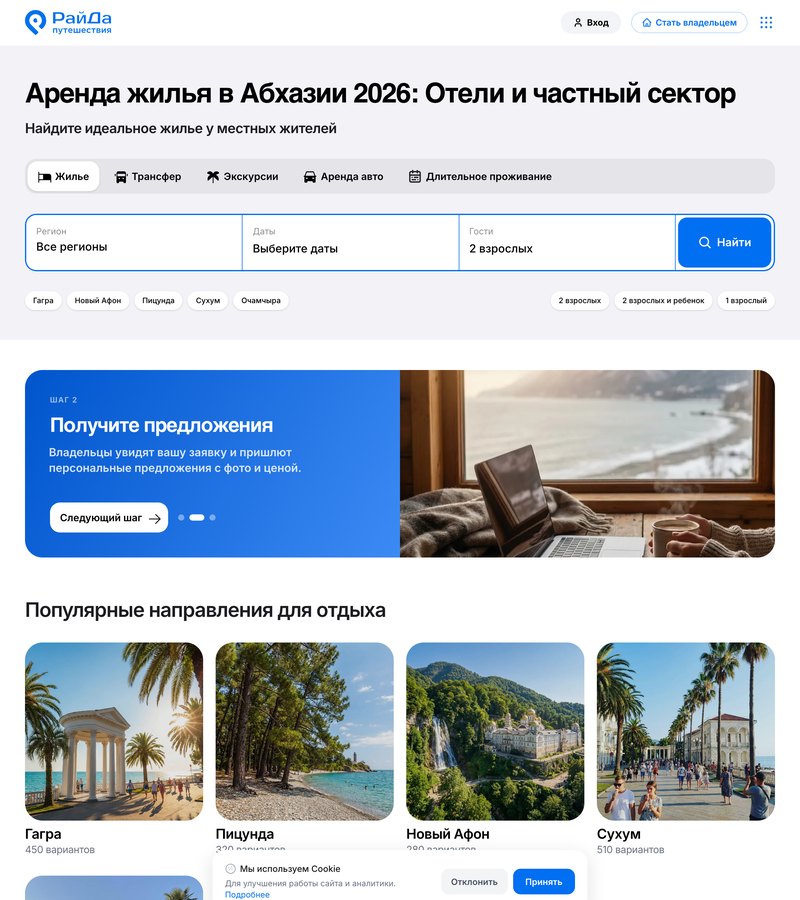
A rental service for Abkhazia: a catalogue of hotels, guesthouses and private stays, search by dates and towns, and booking directly with owners.
rai-da.ru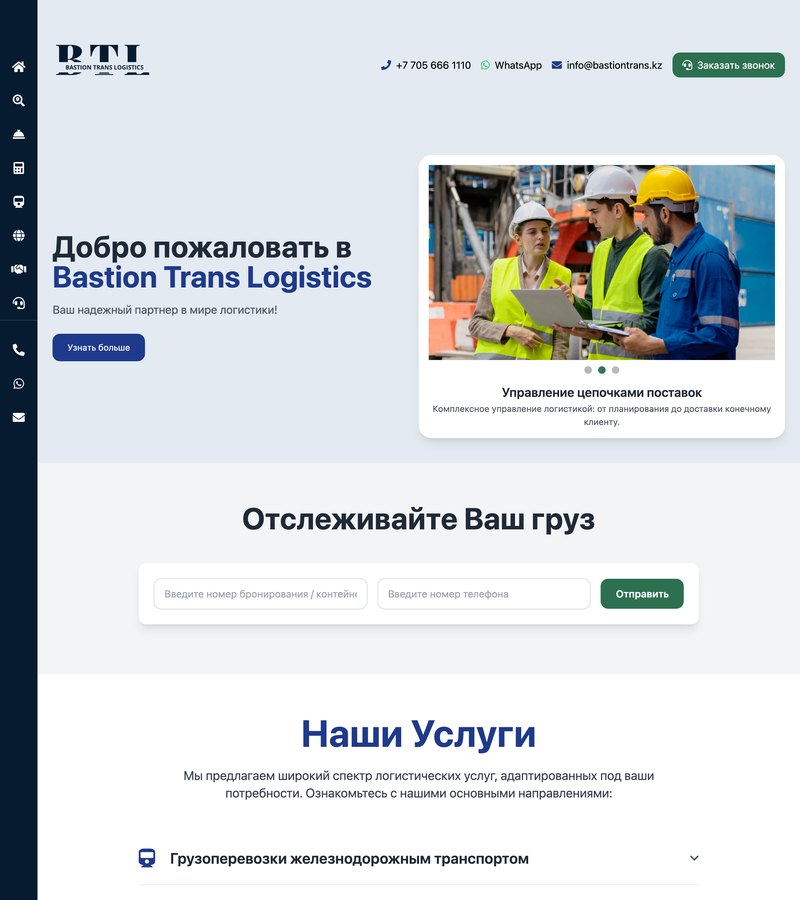
A logistics company site: rail and international freight services, cargo tracking by booking or container number, enquiry forms and quick contact options.
bastiontrans.kzThe studio operates as IE Digital Development (Kazakhstan): contract, invoice and acceptance act, with source code and rights handed over to the client.
See how much a marketplace earns on commission. Move the sliders to match your niche.
Shoppers pick wallpaper, flooring and furniture and instantly see the result in a room. A 3D module like this can be built into a marketplace or a building supply store.
Rotate the room with your mouse or finger, drag furniture, windows and doors
The business model defines the architecture. These are the most common types of platforms and what each one needs.
A catalog with attributes and filters, seller stock and pricing, one cart for several sellers, order splitting and delivery tracking.
Provider profiles, availability calendars, booking with prepayment, reviews after completion and rules for cancellations.
Company accounts with several users, requests for quotes, volume pricing, deferred payment, invoices and delivery documents.
Availability by date, deposits, rental agreements, pickup and return checklists, and damage handling between owners and renters.
Onboarding, listings, orders, payouts, sales analytics and promotion tools in one place, so sellers can work without your support team.
Listing moderation, seller verification, ratings, complaints and automated checks against prohibited content.
Discovery and design are short but decisive: most of the risk in a marketplace sits in the business rules, not in the code.
We define the participants, revenue model, money flow, delivery and returns, and the metrics the MVP has to prove.
Clickable prototypes of the buyer, seller and admin interfaces, plus a specification covering integrations and payment scenarios.
Visual design for desktop and mobile screens, starting with the buyer journey from search to payment.
Backend, catalog, checkout, seller dashboard, admin panel and integrations, shown to you as working demos.
Payment and payout tests with real providers, then a soft launch with the first sellers to catch issues before the public release.
New categories, promotion tools, deeper analytics and performance work as sellers and orders grow.
Didn't find your answer? Ask us — we'll reply within business hours.
Ask a questionA marketplace MVP costs from $1,000. The final budget depends on the model, payment and payout logic, seller tools and delivery integrations.
Timeline for an MVP: from 3 months, including discovery, design, development and testing. Further features are added in phases after launch.
The buyer pays through the platform, the platform keeps its commission and the seller receives a payout — either automatically through split payments or on a schedule. Which scheme is possible depends on your payment provider, bank and legal setup, so we recommend confirming it with your accountant and lawyer early.
Yes. Seller onboarding can include BIN or IIN checks, document uploads and manual moderation. The level of automation depends on the data services available for integration.
We integrate carriers that provide an API, such as CDEK and Kazpost, for rate calculation, shipment creation and tracking. Self-pickup and sellers' own couriers can be supported as well.
For most marketplaces, a responsive website is the faster and cheaper way to validate the model. Mobile apps make sense once you have repeat buyers or when sellers need tools on the go.
That is what we recommend: one category or city, core flows and some manual operations first, then automation and new features based on real data. The architecture is planned for growth from the start.
Only two fields are required: your name and how to reach you. Describe the task in your own words — the more detail, the more accurate the estimate.
Multi-vendor marketplace development is not the same as building an online store with more sellers. A marketplace has three sides — buyers, sellers and you as the operator — and each needs its own interface, rules and incentives. Srazu.kz designs and builds marketplaces for goods, services, B2B trade and rentals, both for startups launching a new platform and for companies turning an existing distribution network into a digital one.
The hardest questions are rarely technical. How will you attract the first sellers? What do you charge for — a commission, a subscription, paid listings? Who handles delivery and returns? How does money move from the buyer to the seller, and when? We work through these questions with you before design starts, because the answers shape the database, the payment flow and the seller dashboard.
We recommend launching a marketplace MVP with one category or one city, a simple commission model and manual operations wherever automation isn't needed yet. Once real transactions show what buyers and sellers actually do, we add automation, new categories and deeper integrations. This keeps the first budget reasonable and avoids spending months on features nobody uses.
For marketplaces operating in Kazakhstan, local details matter from day one: payments through Kaspi and local banks, checks of sellers' BIN or IIN, delivery through CDEK, Kazpost and other carriers via their APIs, and interfaces in Russian, Kazakh and English.
A typical first release covers the full transaction cycle for all three sides of the platform.
There is no single right answer. The choice depends on how unique your model is and how quickly you need to validate it.
| SaaS marketplace platform | Custom MVP | Full custom platform | |
|---|---|---|---|
| Time to launch | Days to weeks | from 3 months | Several months, delivered in phases |
| Upfront cost | Lowest: setup and subscription | from $1,000 | Higher, spread across phases |
| Ongoing fees | Subscription, sometimes a transaction fee | Hosting and support | Hosting, support and a product team |
| Custom business logic | Limited to platform settings | Core logic built for your model | Anything your model requires |
| Local payments and delivery | Depends on available plugins | Kaspi, local banks, CDEK, Kazpost via API | Any provider with an API |
| Ownership | Code stays with the vendor; data export varies | Code and data are yours | Code and data are yours |
| Best for | Testing demand with a standard model | Validating a unique model with real transactions | A proven model ready to scale |
Marketplace MVP development with Srazu.kz: from $1,000, with a timeline from 3 months. The budget grows with the number of user types and the complexity of money flows. The main cost drivers:
Plan for running costs as well: hosting, payment provider fees, SMS and email notifications, and paid delivery or verification APIs. Starting prices for every service are on the pricing page. If the operator side needs back-office automation — purchasing, finance, reporting — the marketplace can be combined with a custom ERP or CRM.
A well-documented stack that grows step by step from MVP to higher load, plus the payment and delivery services your sellers and buyers use.
Backend: Python, Django, FastAPI, PostgreSQL, Redis
Web and mobile: Next.js, React, TypeScript, Flutter, React Native
Payments: Kaspi Pay, Halyk ePay, Freedom Pay, CloudPayments, Stripe
Delivery and maps: CDEK, Kazpost, 2GIS, Google Maps
Notifications: Telegram bots, WhatsApp Business API, SMS via Mobizon, Email
Infrastructure: Docker, S3 storage, CI/CD, Servers in your users' country